

Coding · November 23, 2026
Photodynamic Therapy CPT Codes 96567, 96573 and 96574 for Actinic Keratosis (2027 Guide)
The photodynamic therapy (PDT) CPT codes are 96567, 96573 and 96574, each reported per day. Use 96573 when a physician or qualified health care professional (QHP) applies the drug and the light, and 96574 when that clinician also debrides hyperkeratotic lesions first. Bill the aminolevulinic acid (ALA) drug on its own line with J7308 or J7345, adding the discarded-drug modifier (JW) or the zero-waste modifier (JZ) for single-dose container drugs.
This article is part of the dermatology billing blog, where we cover coding, denials and payer policy as they change.
Blue-light photodynamic therapy treatment setup in a clinical setting. Photo by Sarb Emanuel on Pexels.
More articles
- Incision and Drainage CPT Code: 10060, 10061 and 10040 in Dermatology (2027 Guide)
- Actinic Keratosis ICD 10 Codes: L57.0, L82.0 and L82.1 for Destruction and Removal Claims
- Basal Cell Carcinoma ICD-10 Codes (C44.x): How to Code BCC for Dermatology Billing
- Skin Cancer Screening CPT Code: How to Bill a Full Body Skin Exam With Z12.83 (2027 Guide)
- 2027 Medicare Physician Fee Schedule for Dermatology: What Changes on January 1, 2027
- Dermatology Consultation CPT Code Guide: 99242-99245, Medicare Rules and What to Bill Instead
In this guide
- Which Photodynamic Therapy CPT Code Do You Bill: 96567, 96573 or 96574?
- HCPCS Drug Codes for ALA: J7308 and J7345
- How Do JW and JZ Modifiers Work on ALA Drug Lines?
- Can You Bill an E/M Visit With Photodynamic Therapy?
- Global Periods and the CY 2027 Same-Day 80% Rule
- Diagnosis Coding for PDT: L57.0 for Actinic Keratosis
- Does Your Medicare Contractor Have a Photodynamic Therapy Policy?
- Do Commercial Plans Require Prior Authorization for Photodynamic Therapy?
- Documenting Repeat PDT Treatments
- Worked Example: Two PDT Sessions in February 2027
- What Are the Most Common PDT Billing Errors?
- Get Your Photodynamic Therapy Claims Checked
- Sources
- Frequently Asked Questions
- Want this checked against your own claims?
Last updated: November 23, 2026 · Written by Touseef Riaz, Founder & CEO
Quick answer: The photodynamic therapy (PDT) CPT codes are 96567, 96573 and 96574, each reported per day. Use 96573 when a physician or qualified health care professional (QHP) applies the drug and the light, and 96574 when that clinician also debrides hyperkeratotic lesions first. Bill the aminolevulinic acid (ALA) drug on its own line with J7308 or J7345, adding the discarded-drug modifier (JW) or the zero-waste modifier (JZ) for single-dose container drugs.
Photodynamic therapy billing has three parts: the procedure code, the drug line and the same-day visit. Each part has its own rule, and each rule has its own denial.
Medicare adds one more variable on January 1, 2027. A same-day payment reduction starts that day for office visits billed with 0-day global procedures, and the global indicator of each PDT code decides whether it applies to you.
This guide is for dermatology coders, billers and practice managers. It uses CMS sources, the National Correct Coding Initiative (NCCI) Policy Manual and published plan policies. Diagnosis coding for the same visit is in our actinic keratosis ICD-10 guide.
In this guide
- Which Photodynamic Therapy CPT Code Do You Bill: 96567, 96573 or 96574?
- HCPCS Drug Codes for ALA: J7308 and J7345
- How Do JW and JZ Modifiers Work on ALA Drug Lines?
- Can You Bill an E/M Visit With Photodynamic Therapy?
- Global Periods and the CY 2027 Same-Day 80% Rule
- Diagnosis Coding for PDT: L57.0 for Actinic Keratosis
- Does Your Medicare Contractor Have a Photodynamic Therapy Policy?
- Do Commercial Plans Require Prior Authorization for Photodynamic Therapy?
- Documenting Repeat PDT Treatments
- Worked Example: Two PDT Sessions in February 2027
- What Are the Most Common PDT Billing Errors?
- Get Your Photodynamic Therapy Claims Checked
Which Photodynamic Therapy CPT Code Do You Bill: 96567, 96573 or 96574?
Photodynamic therapy (PDT) for premalignant skin lesions is reported with 96567, 96573 or 96574, each on a per-day basis. The choice turns on two facts in the note: whether a physician or other qualified health care professional (QHP) provided the drug application and illumination, and whether debridement of hyperkeratotic lesions came first.
PDT uses a topical light-sensitive drug and a light source to destroy premalignant skin lesions. Plan policies list these codes beside the drug codes. The CPT book holds the official descriptors, so this guide describes each code in plain words only.
Table 1. Photodynamic therapy CPT codes for skin lesions, compared
| Code | Who applies the drug and light | Debridement first | Drug supply | Reported |
|---|---|---|---|---|
| 96567 | No physician or QHP wording in the code | No | Separate J-code line (J7308 or J7345) | Per day |
| 96573 | Physician or other QHP | No | Separate J-code line (J7308 or J7345) | Per day |
| 96574 | Physician or other QHP | Yes, targeted curettage or abrasion of hyperkeratotic premalignant lesions | Separate J-code line (J7308 or J7345) | Per day |
- Check 1
Physician or QHP?
No -> CPT 96567
When the note does not show physician or QHP application and illumination.
- Check 2
Debridement first?
Yes -> CPT 96574
Targeted curettage or abrasion of hyperkeratotic lesions; replaces 96573.
- Check 3
PDT without debridement
No -> CPT 96573
Physician or QHP provides drug application and illumination, per day.
- Check 4
Add ALA drug line
J7308 or J7345
20% single unit (354 mg) or 10% gel (per 10 mg), plus JW or JZ.
The code facts in Table 1 match the Blue Cross and Blue Shield of Vermont policy code table, which lists all three CPT codes beside J7308 and J7309. This guide covers topical skin PDT. Codes 96570 and 96571 describe endoscopic PDT and are out of scope.
How Do the 96573 and 96574 CPT Codes Differ?
Code 96574 adds debridement of hyperkeratotic premalignant lesions, done by targeted curettage or abrasion, before the light treatment. Code 96573 has no debridement step. Both name a physician or other QHP as the person who provides the drug application and illumination.
Because 96574 already includes the PDT, it replaces 96573 for the same session. The NCCI Policy Manual's Chapter III introduction states the general rule that a provider shall not report multiple codes when one code describes the services performed. Reporting both is unbundling.
The consequence is simple. A session with debridement coded as 96573 under-reports the service, and a session without debridement coded as 96574 over-reports it and invites a recoupment. The note must say which happened.
Where Does the 96567 CPT Code Fit?
Code 96567 is the older PDT code. Plan policy history shows that 96573 and 96574 were added with a revised 96567 descriptor effective January 1, 2018.
If the note does not show a physician or QHP providing the application and illumination, 96573 and 96574 are not supported, and 96567 is the PDT code left. The parenthetical notes in the CPT book settle edge cases, so keep a current copy at the coder's desk. Light-box phototherapy follows different codes, covered in our phototherapy billing guide.
HCPCS Drug Codes for ALA: J7308 and J7345
Healthcare Common Procedure Coding System (HCPCS) code J7308 reports aminolevulinic acid (ALA) 20% as one single unit dosage form of 354 mg. Code J7345 reports ALA 10% gel, with one billing unit per 10 mg. Match the code to the strength and form on the package, not to the brand name.
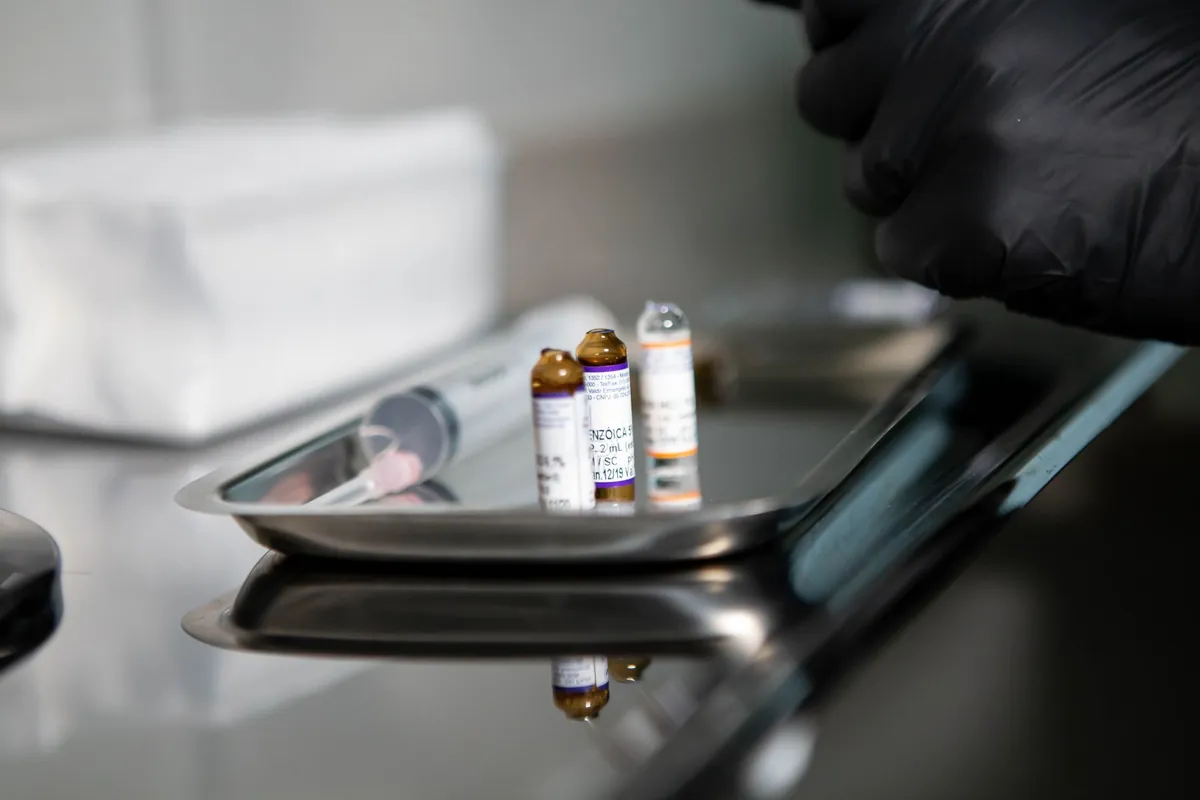
Table 2. Topical ALA drug codes listed with PDT in plan policies
| HCPCS code | Drug, strength and form in the descriptor | Billing unit | Status |
|---|---|---|---|
| J7308 | ALA for topical administration, 20%, single unit dosage form | 1 unit = 354 mg | Active in CMS HCPCS; listed with PDT codes |
| J7345 | ALA for topical administration, 10% gel | 1 unit = 10 mg | Active in CMS HCPCS; listed with PDT codes |
| J7309 | Methyl aminolevulinate, 16.8% | 1 unit = 1 gram | Terminated December 31, 2025 in CMS HCPCS; product discontinued |
These descriptors appear in the Aetna policy code table, which also flags J7309 as a discontinued product. In the CMS January 2027 Alpha-Numeric HCPCS file (posted November 13, 2026, checked November 23, 2026), J7308 (354 mg single unit dosage form) and J7345 (10% gel, 10 mg) are active and J7309 carries a termination date of December 31, 2025; confirm each descriptor and billing unit for your date of service before you load charges.
The CPT code reports the service and the J-code reports the drug, so a PDT claim needs both lines. A claim with 96573 and no drug line leaves the drug cost unbilled. A claim with a drug line and no PDT code has no procedure to attach it to.
Practical tip: store the strength and billing unit of each ALA product in the charge master, and have the clinical staff record the amount applied in the same units. Unit mismatches, such as billing a per-10 mg gel code as one unit per tube, are a charge-entry error that the note cannot repair after the fact.
How Do JW and JZ Modifiers Work on ALA Drug Lines?
The JW modifier reports the amount of a single-dose container drug that was discarded, and the JZ modifier attests that none was discarded. Medicare requires one of the two on separately payable Part B drug lines from single-dose containers or single-use packages. An ALA line qualifies when the product's Food and Drug Administration (FDA) labeling describes that packaging.
According to the CMS JW and JZ modifier FAQ, JW has been required since January 1, 2017, and JZ has been required since no later than July 1, 2023. CMS also says providers must document discarded amounts in the beneficiary's medical record.
The same FAQ explains the scope of the policy. It applies to drugs separately payable under Part B that FDA labeling describes as single-dose or single-use, and it does not apply to multiple-dose containers. Check the ALA product's labeling and CMS's code list on its Average Sales Price (ASP) billing resources page before you decide.
This is the Medicare Part B rule. For Medicaid and commercial plans, read the plan's own drug billing policy. Our JW and JZ wastage modifier guide shows the claim line setup for other dermatology drugs.
When Do You Report JZ?
Report JZ on a single drug line when nothing was discarded. CMS says the claim line carries the drug code, the JZ modifier and the units administered, even when more than one container was needed to prepare the dose.
Partly used units also take JZ. CMS does not use fractional billing units, so when the dose given is smaller than the billing unit, the provider reports the full unit with JZ and does not use JW. Applied to a one-unit code such as J7308, that rule points to one unit with JZ for a partly used dosage form.
When Do You Report JW?
Report JW on a second claim line for the discarded units. The administered units go on one line with no modifier, and the discarded units go on another line with the same drug code and JW. CMS's own example is a container labeled for 100 billing units where 95 units are given and 5 are discarded. Both lines are processed for payment.
Discarded means the labeled amount minus the prescribed dose, and Medicare pays for the discarded amount up to the labeled amount.
What Happens When the Modifier Is Missing?
CMS says claims that omit the required modifier may be returned as unprocessable starting October 1, 2023, until they are corrected and resubmitted. The whole claim comes back, including the PDT line, until someone corrects and resubmits it.
Can You Bill an E/M Visit With Photodynamic Therapy?
Yes, when the E/M visit is significant, separately identifiable and unrelated to the decision to perform the procedure. The NCCI Policy Manual says modifier 25 goes on that E/M service, and that the E/M and the procedure do not need different diagnoses.

The manual's rule for procedures with 000 or 010 global periods is that the decision to perform the procedure is included in payment for the procedure. For XXX procedures, the same page says modifier 25 may fit an E/M above the usual pre- and post-procedure work. It cannot include work inherent in the procedure.
The note therefore needs two separate stories: the PDT session and the separate problem. A visit that only confirms the plan to treat and then treats is one service. A visit that also evaluates a new lesion, a medication question or a skin cancer concern has an E/M to report. Our modifier 25 guide covers documentation patterns that survive review.
Plans can be stricter. The Blue Cross and Blue Shield of Vermont policy says a second visit made only to give the blue light should not draw a separate E/M code. The same policy describes PDT as typically involving 2 office visits, one to apply the topical ALA and one for the light.
If your workflow splits application and illumination across two dates, which date carries the PDT code and the drug line is a CPT and payer question. Ask the plan in writing and keep the answer with the policy.
Global Periods and the CY 2027 Same-Day 80% Rule
For services on or after January 1, 2027, Medicare pays the higher-paid of a same-day office visit and a 0-day global procedure at 100% and the other at 80%. The calendar year (CY) 2027 Physician Fee Schedule (PFS) final rule excludes 10-day and 90-day global procedures.
CMS announced the policy in its CY 2027 PFS final rule fact sheet, dated November 4, 2026. The proposal would have paid the second service at 50% and covered 0-, 10- and 90-day globals. The final rule narrowed it to 0-day globals and raised the rate to 80%.
The fact sheet describes the 80% for surgical procedures and office or outpatient E/M visits. It does not mention separately payable drug lines, so do not assume the J7308 or J7345 line is cut.
The fee schedule carries a global indicator for each code, so read it for each PDT code rather than assuming one value for all three. NCCI lists the possible global periods as 000, 010, 090, XXX, YYY, ZZZ or MMM and says the global concept does not apply to XXX procedures. In the CMS January 2027 Relative Value file (RVU27A, released November 10, 2026), checked November 23, 2026, 96567 carries global indicator XXX, while 96573 and 96574 each carry global indicator 000 (0-day global). Read the indicator for each code yourself.
- Open the CMS Physician Fee Schedule look-up for your date of service.
- Search 96567, 96573 and 96574 one at a time and read the global days field.
- Flag every code that shows 000 as in scope for the 80% rule.
- Flag every code that shows XXX for a written answer from your Medicare Administrative Contractor (MAC), because the CMS fact sheet names only 0-day globals.
- Match the flagged codes against same-date E/M lines that carry modifier 25.
Our 2027 Medicare fee schedule guide for dermatology tracks the rest of the January 1 changes.
Diagnosis Coding for PDT: L57.0 for Actinic Keratosis
The International Classification of Diseases, 10th Revision, Clinical Modification (ICD-10-CM) code L57.0 reports actinic keratosis. Aetna's PDT code table lists L57.0 as the diagnosis for PDT of actinic keratosis, and the same diagnosis goes on the procedure line, the drug line and any separately billed E/M.
The Aetna code table pairs L57.0 with 96567, 96573, J7308 and J7345, and marks the diagnosis "refractory" in its list. That word is a documentation trigger. If the plan's covered-diagnosis wording includes a qualifier, the note has to carry it in the provider's own words.
The same table lists other diagnoses for topical skin PDT, such as basal cell carcinoma and carcinoma in situ of skin. This guide covers actinic keratosis only, because each diagnosis family has its own plan criteria.
Do not default a bare "keratosis" note to L57.0. The note must name the lesion as actinic before the code goes on the claim. The guide linked in the introduction covers the lesion types and what pairs with each.
Does Your Medicare Contractor Have a Photodynamic Therapy Policy?
A Medicare Administrative Contractor (MAC) can publish a local coverage determination (LCD) or billing article that sets covered diagnoses and documentation for PDT in its jurisdiction. This guide uses CMS sources only, so it quotes no contractor's policy. Check the one that processes your claims.
CMS itself points billers the same way. Its JW and JZ FAQ tells providers to check with the MAC that processes their Part B drug claims for local billing and documentation information.
- Identify the MAC that pays your Part B claims.
- Search the Medicare Coverage Database for photodynamic, aminolevulinic, J7308, J7345 and 96573.
- Open every hit and confirm the contractor name and the effective date.
- Copy the covered diagnoses, frequency limits and documentation requirements into your scrubber rules.
- Ask the MAC directly if the search returns nothing, because an empty search does not prove there is no policy.
Do Commercial Plans Require Prior Authorization for Photodynamic Therapy?
Some commercial plans do. The Blue Cross and Blue Shield of Vermont policy, effective March 1, 2024, marks 96567, 96573 and 96574 as prior approval required. Aetna's Clinical Policy Bulletin 0375 lists different codes. Each plan's own policy decides, so read the one for the plan on the member's card.

Table 3. What two published plan policies say about PDT codes
| Plan policy | Review date | What the code table shows | Billing consequence |
|---|---|---|---|
| Blue Cross and Blue Shield of Vermont, 2.01.VT44 | Last review 02/2024; effective 03/01/2024 | 96567, 96573 and 96574 each marked prior approval required; J7308 and J7309 listed without an instruction | Get approval before the session |
| Aetna Clinical Policy Bulletin 0375 | Last reviewed May 21, 2026 | 96567 and 96573 listed as covered if criteria are met, with J7308, J7345 and L57.0; 96574 appears only under non-cancer indications not covered | Read the table for the exact code on your claim |
| Medicare contractor policy | Not quoted in this guide | Set by the LCD or billing article of your MAC, if one exists | Search the Medicare Coverage Database for your contractor |
The Vermont prior approval instruction sits on the three CPT lines and is blank on the J-code lines. The same policy reserves the right to recoup payments that fail its guidelines after an audit, so skipping approval is a payment risk after the fact too.
Aetna's bulletin states that it addresses commercial medical plans and sends Medicare readers to a separate Medicare Part B page. Do not borrow one plan's code list for another plan.
Read the diagnosis wording too. The Vermont policy names nonhyperkeratotic actinic keratoses of the face and scalp and of the upper extremities among its medically necessary indications. A 96574 claim reports debridement of hyperkeratotic lesions, so the note and the plan's criteria need a side-by-side read before submission.
Our dermatology prior authorization services page explains how a team tracks approvals to the date of service. Approval scope, such as the number of sessions or the date range, is set by each plan and is not stated in the policies above.
Documenting Repeat PDT Treatments
Each PDT session needs its own note and its own date-of-service lines on the claim. The Vermont policy says PDT protocols typically involve 2 treatments spaced a week apart, and that more than one treatment series may be required. A plan that limits frequency will count your sessions, so the record has to show the series.
Plan frequency limits are not published in the policies used for this guide, so confirm yours in the plan's policy or with a written answer from its provider line. Build each session note around the items below.
- Date and session number: the date of service and where it falls in the series.
- Treated area: the anatomic site, so a later claim cannot be mistaken for a duplicate.
- Who did what: who applied the drug and who delivered the light, because that decides 96573 or 96574 against 96567.
- Debridement: whether it was done at this session, because that separates 96574 from 96573.
- Drug amounts: the product, strength, form, amount applied and amount discarded, in the claim's billing units.
- Reason for repeat treatment: the provider's stated reason in the provider's own words.
- Separate E/M content: a distinct section for any evaluation that stands apart from the PDT.
- Authorization: the approval number and approved dates, if the plan issued them.
Worked Example: Two PDT Sessions in February 2027
Two PDT sessions in February 2027 produce five claim lines. Session 1 on February 9 carries an E/M with modifier 25, 96574 and J7308 with JZ. Session 2 on February 16 carries 96573 and J7308 with JZ. The scenario is generic and carries no patient details.
A Medicare Part B practice treats one established patient for actinic keratosis. Application and illumination both happen on the date of service at each session, and the physician provides both.
Session 1 is Tuesday, February 9, 2027. The physician also evaluates a separate new concern, with its own documentation, then debrides hyperkeratotic lesions and performs PDT. The whole 354 mg dosage form is used, and none is discarded.
Session 2 is Tuesday, February 16, 2027, 7 calendar days later. The physician performs PDT without debridement and does not bill an E/M visit. Both dates fall after the January 1, 2027 start of the 80% rule, so the global indicator of each code matters for session 1.
Table 4. Claim lines for the two sessions
| Session | Line | Code | Modifier | Units | Diagnosis | Why |
|---|---|---|---|---|---|---|
| 1 (02/09/2027) | 1 | 99213 | 25 | 1 | L57.0 | Separately identifiable E/M, documented apart from the PDT |
| 1 (02/09/2027) | 2 | 96574 | None | 1 | L57.0 | Debridement plus PDT by the physician |
| 1 (02/09/2027) | 3 | J7308 | JZ | 1 | L57.0 | Whole dosage form used, nothing discarded |
| 2 (02/16/2027) | 1 | 96573 | None | 1 | L57.0 | PDT by the physician, no debridement |
| 2 (02/16/2027) | 2 | J7308 | JZ | 1 | L57.0 | Whole dosage form used, nothing discarded |
- Step 1
Feb 9, 2027 · Session 1
99213-25 (separate E/M), 96574 (debridement + PDT) and J7308-JZ (1 unit, L57.0)
- Step 2
Feb 16, 2027 · Session 2
96573 (PDT without debridement) and J7308-JZ (1 unit, L57.0); no E/M billed
- Step 3
CY 2027 80% rule
96574 has a 000 global in CMS RVU27A, so Session 1 pairs 99213-25 and 96574 (100% / 80%)
Three points apply. Modifier 25 sits on the E/M line, not on 96574. If the plan requires prior approval, both sessions need it on file before the date of service. And if the global indicator for 96574 shows 000, the 99213 line and the 96574 line are the same-day pair for the 80% rule, with the lower-paid of the two at 80%.
DermBilling USA, a dermatology-only billing company, reviews claim lines like these in its free dermatology claims audit, using a de-identified sample of your claims. The request link is in the "Get Your Photodynamic Therapy Claims Checked" section below.
What Are the Most Common PDT Billing Errors?
Eight errors recur across the rules in this guide. They fall into three groups: drug line modifiers and units, procedure and E/M pairing, and plan approval. Screen every PDT claim against the list below before release.

- Drug line with no JW or JZ. Medicare may return the claim unprocessed. Add JZ when nothing was discarded and JW on a second line when units were.
- JW on a partly used one-unit code. CMS says to report the full billing unit with JZ instead.
- Reporting 96573 and 96574 for one session. The debridement code already includes the PDT. Report one.
- Modifier 25 on the PDT line. NCCI directs the modifier to the E/M code.
- An E/M for a visit made only to deliver light. The Vermont policy says that visit should not warrant a separate E/M code.
- A J-code that does not match the product. J7308 and J7345 differ by strength, form and billing unit.
- A same-day destruction code for a lesion inside the treated field. NCCI Chapter III allows more than one removal code only when it is medically necessary to remove lesions separately, with anatomic modifiers or modifier 59 or XS. See our lesion destruction coding guide and check the current NCCI procedure-to-procedure table for the date of service.
- No plan approval on file. A plan with prior approval rules can deny or recoup the session. Our CO-50 not medically necessary guide covers the appeal route.
Get Your Photodynamic Therapy Claims Checked
PDT claims fail at the joins between the procedure, the drug and the visit. A free dermatology claims audit reviews a de-identified sample of your claims and shows where those lines are losing payment.
Request a free dermatology claims audit
Sources
- Discarded Drugs and Biologicals: JW Modifier and JZ Modifier Policy Frequently Asked Questions, Centers for Medicare & Medicaid Services
- Medicare NCCI Policy Manual, Chapter III: Surgery, Integumentary System (revision date January 1, 2026), Centers for Medicare & Medicaid Services
- Calendar Year (CY) 2027 Medicare Physician Fee Schedule Final Rule fact sheet (November 4, 2026), Centers for Medicare & Medicaid Services
- CMS January 2027 Physician Fee Schedule Relative Value File (RVU27A, updated November 10, 2026), Centers for Medicare & Medicaid Services
- CMS January 2027 Alpha-Numeric HCPCS File (posted November 13, 2026), Centers for Medicare & Medicaid Services
- Medicare Physician Fee Schedule look-up, Centers for Medicare & Medicaid Services
- Medicare Coverage Database, Centers for Medicare & Medicaid Services
- Photodynamic Therapy, Clinical Policy Bulletin 0375 (last reviewed May 21, 2026), Aetna
- Dermatologic Applications of Photodynamic Therapy, Medical Policy 2.01.VT44 (effective March 1, 2024), Blue Cross and Blue Shield of Vermont
Primary sources
Coding and coverage rules change. Verify against the source before you bill.
- CMS Physician Fee Schedule lookupNational and locality payment amounts for dermatology CPT codes
- CMS Medicare Coverage Database (LCDs & articles)MAC-jurisdiction local coverage determinations and billing articles
- CMS National Correct Coding Initiative (NCCI) editsProcedure-to-procedure edits and modifier indicators
- CMS Medicare Claims Processing ManualAuthoritative claim submission and payment rules
- AMA CPT coding resourcesOfficial CPT code set guidance and annual changes
- AAPC certification directoryVerification path for CPC, CPMA, CPB and CHC credentials
Where this sits in our reference library
The evergreen pages behind this article, kept current as payer policy moves.
Frequently Asked Questions
The CPT codes are 96567, 96573 and 96574, each reported per day for premalignant skin lesions. Which one you bill depends on who provides the drug application and illumination and whether debridement comes first. Endoscopic PDT uses 96570 and 96571, which are separate codes.
Code 96574 includes debridement of hyperkeratotic premalignant lesions before the light treatment, and 96573 does not. Both describe a physician or other QHP providing the drug application and illumination. Because 96574 includes the PDT, it replaces 96573 for the same session.
J7308 reports ALA 20% as a single unit dosage form of 354 mg, and J7345 reports ALA 10% gel per 10 mg. Choose the code that matches the strength and form on the package. Confirm the descriptor in the current CMS HCPCS file.
Yes, for Medicare Part B when the drug is a separately payable single-dose container or single-use package drug. JZ means nothing was discarded, and JW goes on a second line for discarded units. Medicaid and commercial plans follow their own policies.
Yes, when the visit is significant, separately identifiable and unrelated to the decision to perform the procedure. Put modifier 25 on the E/M code. Some plans refuse a separate E/M for a visit made only to give the light.
It applies only if the PDT code has a 0-day global period. The CMS fact sheet names 0-day global procedures and excludes 10-day and 90-day globals, and the rule starts January 1, 2027. Read each code's global days in the CMS fee schedule look-up.
Some plans require it. Blue Cross and Blue Shield of Vermont marks 96567, 96573 and 96574 as prior approval required in a policy effective March 1, 2024. Read the policy for each member's plan before scheduling.
About the Author
CEO of DermBillingUSA
Touseef Riaz is CEO of DermBillingUSA and writes about dermatology practice revenue cycle management, billing operations, and business performance.
LinkedIn